
Picture a baby dragonfly.
Is it tiny and cute, with a jewel-toned exterior and giant cartoon eyes? Or does it look like an alien, with a stubby black body, trapezoidal head, and water dripping off of its grubby, glistening exoskeleton?

Though most people think of dragonflies as terrestrial flying insects, they actually spend most of their lives in the water. The cycle begins when an adult female lays her eggs on the surface of the water or in aquatic vegetation along the edge of a lake, pond, or marsh. Interestingly, some species of damsel and dragonflies will lay their eggs in tandem while still fully joined (just in case another guy tries to sneak in at the last minute!) and still others employ a stalker-like strategy, where the male hovers nearby and guards “his” female the entire time she is laying eggs.
Once hatched, a baby dragonfly is known as a nymph, and it will live in the water for several years. Unlike the nymphs of Greek mythology, however, dragonfly nymphs are neither beautiful nor alluring. Their blackish-brown bodies are well-designed to blend in with the mud and muck at the bottom of a pond, they have no wings, and their appearance is rather creepy. Even in their youth, these insects are voracious predators that will ambush and eat mosquito larvae, bloodworms, small crustaceans (like scuds and daphnia), tadpoles, and even small fish.
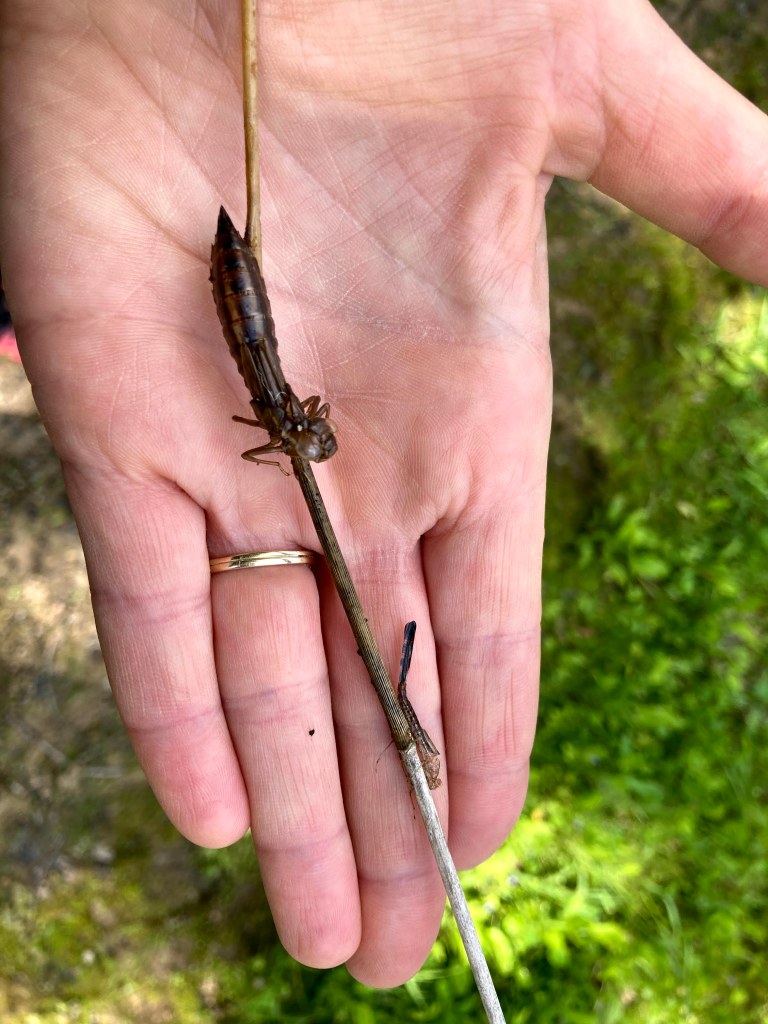
Unlike butterflies, dragonflies undergo a process known as incomplete metamorphosis. While living in the water as nymphs, they will molt as many as 12 times as they grow. Dragonfly “instars” look the same as one another – six legs and three body parts that blend together like one fattish body – but grow progressively larger like nesting dolls. Eventually, after one to five years, the final nymph will crawl onto a blade of grass along the water’s edge, perch, and go through metamorphosis. When it emerges from its exoskeleton as a flying adult, its remaining lifespan is usually only 4-7 weeks long!
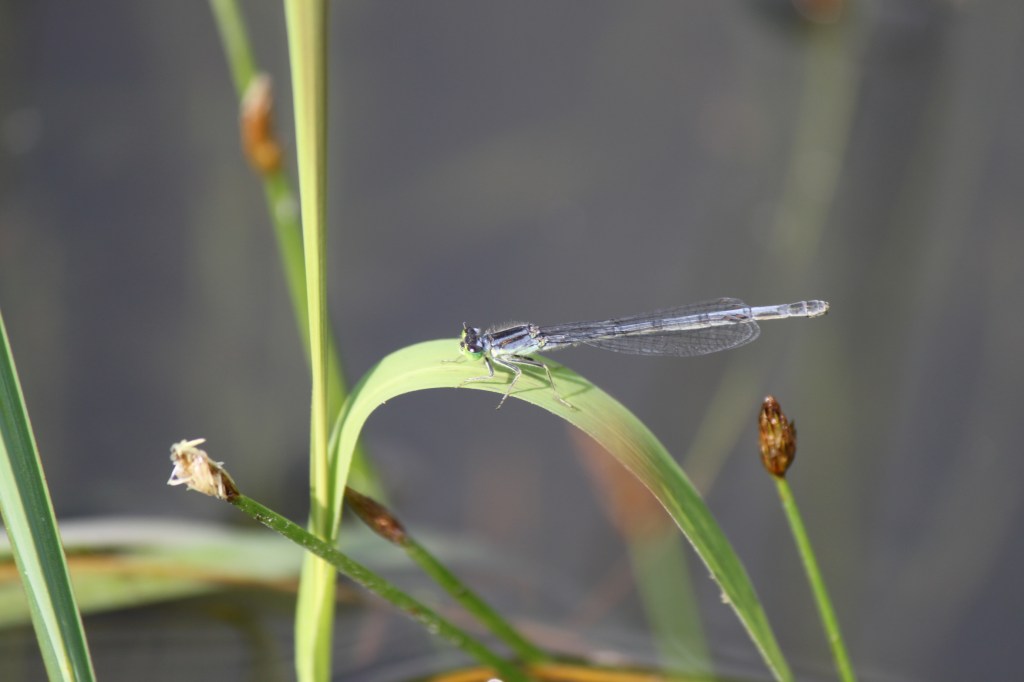
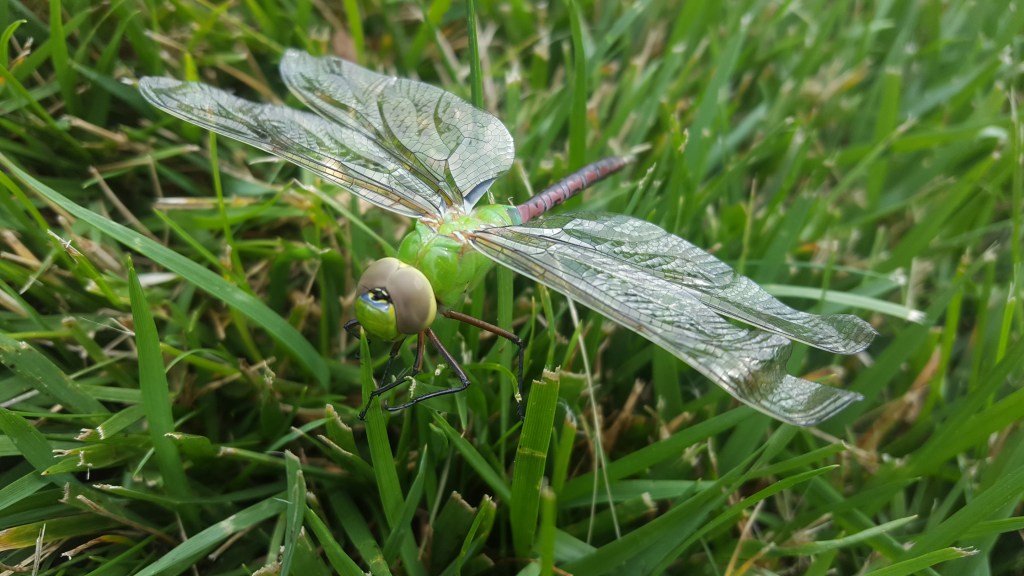
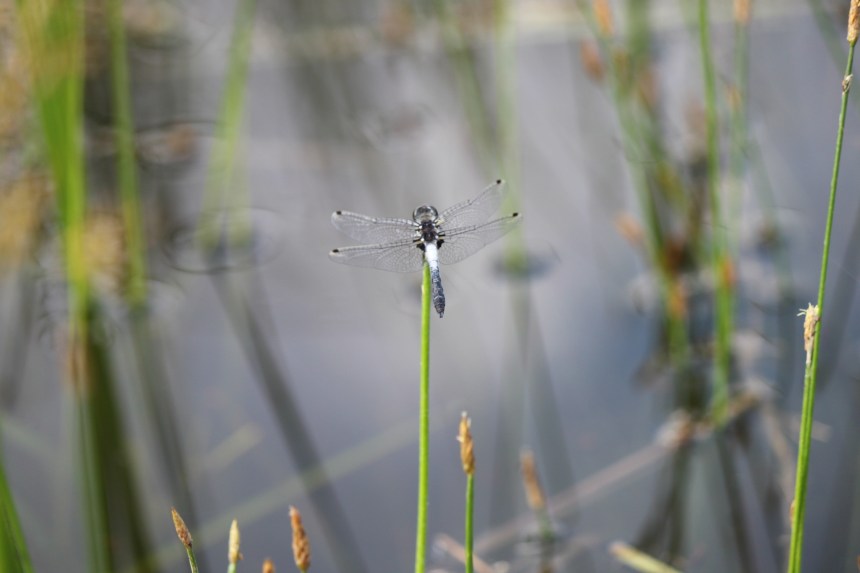
Dragonflies and damselflies together form the order known as Odonata. The easiest way to tell the two apart is that dragonflies have fatter bodies and hold their wings out flat when they rest, while damselflies have long skinny bodies and hold their wings folded above their bodies when they rest. Underwater, the nymphs look fairly different as well. Dragonfly nymphs are large and fat, while damselfly nymphs are thin and have gills at the tip of their abdomens that look like three-pronged tails.
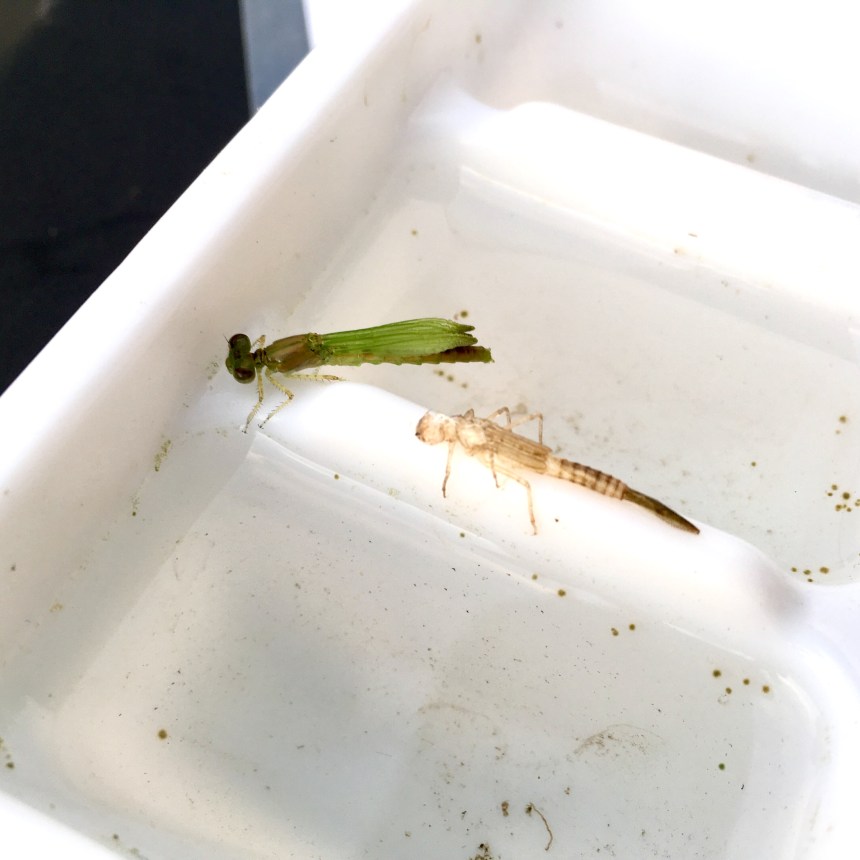
You might be surprised to learn that some species of dragonflies actually migrate. For example, green darner dragonflies complete a complex, multi-generational migration each year, traveling from the northern U.S. and Canada down to the Gulf Coast and Mexico. The dragonflies that eventually return to Minnesota are the great great grandchildren of the ones who left.
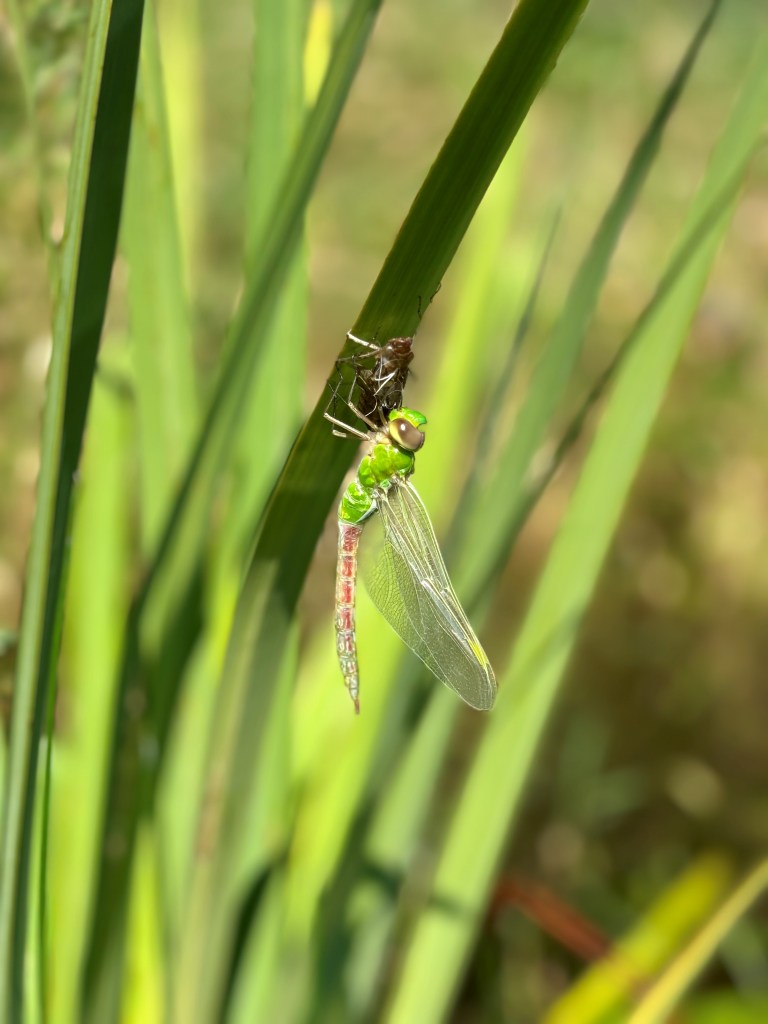
If you like spending time by the water, dragonflies will be some of your greatest allies. They are incredible hunters with a 95% success rate at catching prey, and can eat 30-100 mosquitoes a day! In addition, they also eat midges, flies, and gnats.
To support dragonflies, make sure to leave natural areas with reeds and grasses along the edges of lakes and wetlands and avoid using insecticide sprays that might kill dragonflies and other beneficial insects. “Mosquito dunks” made from Bti or Methoprene bacteria, however, have been shown to be safe and will only impact mosquitoes and biting gnats.
Now that you know what to look for, keep your eyes peeled for dragonfly nymphs in the lakes and wetlands this spring!


